Skip to Primary NavigationSkip to ContentSkip to Footer
  • Personal
  • Business
  • Enterprise
  • Deals
  1. Environmental Responsibility/
  2. Our Environmental Responsbility/
  3. Mobile Phone Towers Safety and Environmental Impact

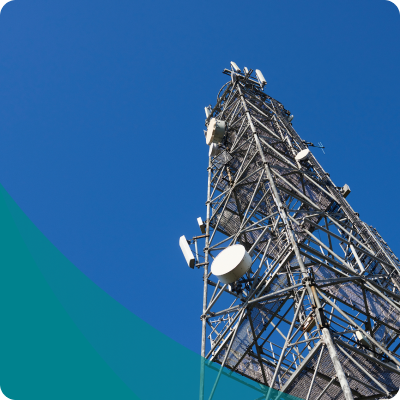
Mobile Phone Towers

Safety and the environment

What you need to know about Electromagnetic Energy and our health and safety measures.

Electromagnetic Energy (EME)

Health concerns have been raised globally about exposure to Electromagnetic Energy (EME) emissions, through mobile phones and mobile network infrastructure like base stations.

Health & Safety impacts

There’s Currently no proven evidence of public health risks from EME exposure at the levels typically produced by mobile phones or mobile phone towers. However, concern about perceived risks can persist.
Our network, products and services are all fully compliant with all relevant Federal Government mandated standards.

These standards are formulated and regularly reviewed by the Australian Radiation Protection and Nuclear Safety Agency (ARPANSA), part of the Commonwealth Department of Health. ARPANSA’s Standards are based upon those recommended by the International Commission on Non-Ionizing Radiation Protection (ICNIRP), in collaboration with the World Health Organisation (WHO).

ICNIRP Standards are adopted and considered best practice by many countries around the world. We audit our base stations and use predictive EME modelling and testing to ensure our sites are fully compliant and our EME reports are available to the public at rfnsa.com.au. We continually monitor research findings on potential EME health risks and their implications against relevant global standards and regulations.

Find further information about EME and mobile technology at:

Electromagnetic energy (EME) and you
EMF Explained
Mobile Carriers Forum
Department of Communications and Arts
Australian Radiation Protection and Nuclear Safety Agency
Australian Communications and Media Authority
Australian Centre for Electromagnetic Bioeffects Research (ACEBR)
International Commission on Non-Ionizing Radiation Protection (ICNIRP)
Australian Mobile Telecommunication Association (AMTA)


Read More Read Less

Biodiversity & Land Management

Our greatest impact on biodiversity and land can occur during the installation and maintenance of network facilities such as fibre-optic cables, pits, manholes, mobile base stations, and radio and satellite dishes.

This is why our Land and Environment (L&E) and Mobile Deployment & Support Services (MDSS) teams undertake site assessments before work starts and take action to minimise impacts.

They focus on full compliance with the Telecommunications Act 1997, the Telecommunications Code of Practice 1997 and the Telecommunications (Low-impact Facilities) Determination 1997. These acts ensure Optus carries out a number of actions during network deployment and operations, which include:

  • Minimising damage to fauna habitat and vegetation as possible
  • Giving notice to interested parties such as owners and occupiers
  • Drawing agreements between those involved
  • Implementing best practice
  • Noise management
  • Compliance with relevant industry standards and codes
  • Implementing procedures for dealing with objections
  • Assessment of visual impact

Where an area is determined to be’of environmental significance’ under federal or state legislation and the installation cannot be avoided, Optus undertakes detailed environmental assessments and relevant planning consents before installation. This allows the work and ongoing maintenance to be performed in a way that minimises disturbance.
 

Read More Read Less

Biodiversity & Land Management

Our greatest impact on biodiversity and land can occur during the installation and maintenance of network facilities such as fibre-optic cables, pits, manholes, mobile base stations, and radio and satellite dishes.

This is why our Land and Environment (L&E) and Mobile Deployment & Support Services (MDSS) teams undertake site assessments before work starts and take action to minimise impacts.

They focus on full compliance with the Telecommunications Act 1997, the Telecommunications Code of Practice 1997 and the Telecommunications (Low-impact Facilities) Determination 1997. These acts ensure Optus carries out a number of actions during network deployment and operations, which include:

  • Minimising damage to fauna habitat and vegetation as possible
  • Giving notice to interested parties such as owners and occupiers
  • Drawing agreements between those involved
  • Implementing best practice
  • Noise management
  • Compliance with relevant industry standards and codes
  • Implementing procedures for dealing with objections
  • Assessment of visual impact

Where an area is determined to be’of environmental significance’ under federal or state legislation and the installation cannot be avoided, Optus undertakes detailed environmental assessments and relevant planning consents before installation. This allows the work and ongoing maintenance to be performed in a way that minimises disturbance.


Read More Read Less

More from Optus

  • My Optus App
  • SubHub
  • Accessories
  • Student Hub

Customer Service

  • Contact Us
  • Help & Support
  • Store Locator
  • Payment Assistance Policy
  • Feedback & Complaints
  • Report a service outage

About Us

  • About Optus
  • Careers
  • Corporate Information
  • Media Releases
  • About Singtel
  • Accessibility

  • Blog
  • Connect With Us on facebook
  • Connect With Us on instagram
  • Connect With Us on tiktok
  • Connect With Us on linkedin
  • Connect With Us on twitter
  • Connect With Us on youtube

  • Critical Information Summaries
  • Standard Agreement
  • Privacy, Security & Safety

Connect with us

  • Blog
  • Connect With Us on facebook
  • Connect With Us on instagram
  • Connect With Us on tiktok
  • Connect With Us on linkedin
  • Connect With Us on twitter
  • Connect With Us on youtube
  • Critical Information Summaries
  • Standard Agreement
  • Privacy, Security & Safety
© 2026 Singtel Optus Pty Limited
Optus acknowledges the Traditional Custodians of the lands, waters and skies across Australia. We pay our respects to Elders past and present and honour the strength and continuity of the world's oldest living cultures.