Project Aurora: Smarter Satellite Servicing for a connected future
For decades, the satellite industry followed a simple model: build a satellite, launch it into orbit and operate it until its fuel runs out. Today, that model is changing.
Advances in in-orbit servicing are transforming how satellite operators think about asset management, resilience and sustainability. Rather than retiring capable satellites prematurely, operators can now extend their operational life through advanced servicing technologies.
At Optus, we're helping lead that transformation through Project Aurora, our mission to extend the life of the Optus D3 satellite while strengthening the long-term resilience of our satellite network.
The successful completion of Aurora Phase I marks a significant milestone in that journey and offers an important glimpse into the future of satellite operations.
Like many geostationary satellites, Optus D3 was approaching the end of its fuel reserves despite the satellite itself remaining in excellent working condition.
Traditionally, this would have signalled the beginning of the end of the satellite's operational life. However, replacing a satellite is a complex undertaking that requires years of planning and significant investment. Instead, we explored a smarter approach.
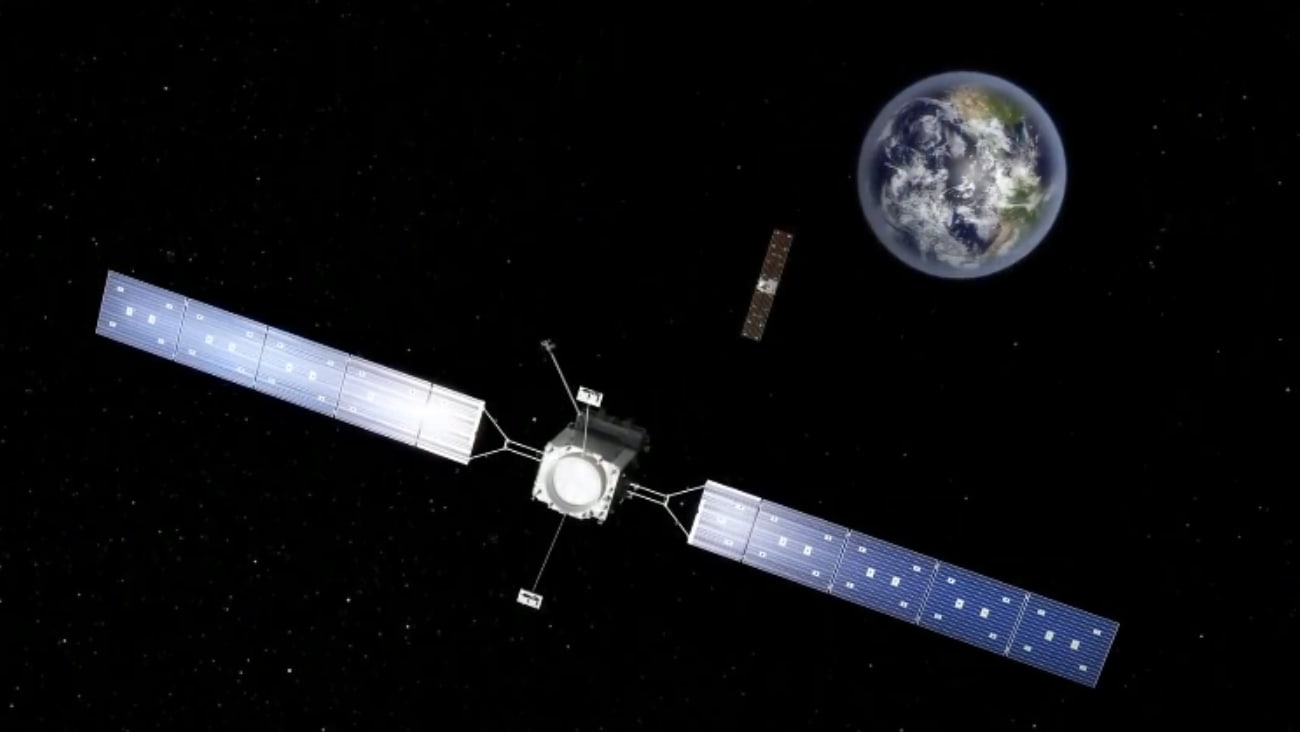
Working with SpaceLogistics, a division of Northrop Grumman, Aurora Phase I utilised a Mission Extension Vehicle (MEV) that successfully docked with Optus D3 and provided the propulsion and attitude control support required to maintain its orbital position.
Following more than a year of successful operations, the MEV has now completed its mission and safely undocked from D3, marking the successful conclusion of the first phase of Project Aurora.
This achievement demonstrates that satellite life extension is no longer a future concept. It is now a proven operational capability.
At its core, Project Aurora is about resilience. Optus D3 plays an important role in our satellite network by providing valuable in-orbit redundancy and operational flexibility. Maintaining that capability supports the continuity and reliability that customers depend on across Australia and the Asia-Pacific region.
For our enterprise and government customers, resilient satellite infrastructure is increasingly important and reliable connectivity remains essential.
By extending the life of D3, we can continue to provide connectivity to support regional communities and an provide an extra layer of resilience across our network, while making the most of existing infrastructure. Project Aurora also provides valuable operational experience in advanced on-orbit servicing technologies that are expected to play a significant role in the future of the global satellite industry.
While Aurora Phase I proved the concept, Aurora Phase II is where the story becomes even more exciting.
Following the recent launch of Northrop Grumman's Mission Robotic Vehicle (MRV) carrying a Mission Extension Pod (MEP) for D3, the next phase of the project is now underway.
The MEP represents an evolution in satellite servicing. Rather than providing temporary life extension support, the pod is designed to become a permanent addition to the satellite once installed.
Using advanced robotic servicing technology, the MRV will rendezvous with Optus D3 and install the MEP during a planned mission in 2027.
Once operational, the MEP is expected to extend the life of D3 by six additional years, supporting service continuity well into the next decade.
This is a meaningful step forward for satellite lifecycle management and demonstrates how operators can create greater flexibility in the way critical space infrastructure is maintained and utilised.
Australia's digital economy increasingly relies on resilient communications infrastructure. While terrestrial networks provide extensive coverage, satellites remain essential for delivering connectivity to remote locations, supporting national resilience and ensuring continuity when other communication pathways may be disrupted.
Projects like Aurora contribute to the longevity and adaptability of sovereign satellite assets, helping operators maximise the value of existing investments while continuing to innovate.
Importantly, they also show how strong partnerships can accelerate technological progress. Our collaboration with SpaceLogistics and Northrop Grumman has enabled Optus to participate in some of the most advanced commercial satellite servicing missions undertaken anywhere in the world.
Project Aurora reflects a broader shift occurring across the space sector. In the same way that aircraft, ships and other critical infrastructure are routinely maintained throughout their operational lives, satellites are now entering an era where servicing, upgrades and life extension can become part of normal operations.
That has significant implications for network resilience, sustainability and the economics of satellite infrastructure. For Optus, Aurora demonstrates how practical innovation can deliver tangible benefits today while helping prepare for the challenges of tomorrow.
As we move into the next phase of the mission, we remain focused on strengthening our satellite network, supporting customers who rely on these services and exploring new ways to maximise the value of critical space assets.
Because keeping Australians connected is not just about launching new technology. It's about ensuring the technology we already have continues to deliver value for years to come.
Learn more about what we do in Optus Satellite here.

Harvey Wright
Executive General Manager, Optus Satellite
Harvey Wright leads Optus Satellite & Space Systems, Australia’s leading sovereign GEO satellite provider. He partners with customers across Australia and the region to deliver broadcast and communications services, backed by Optus’ more than 40 years of experience in space.

To adapt to rapid change, you need more than technology
10 September 2026
Ask any enterprise leader about their five-year strategy and they’ll tell you the same thing: static roadmaps are dead.Boar...
Marist180 x Optus: The hidden cost of disconnection
9 September 2026
When Australians think about connectivity, they often think about convenience. Streaming a movie. Joining a Teams meeting. ...
Project Aurora: Smarter Satellite Servicing for a connected future
12 August 2026
For decades, the satellite industry followed a simple model: build a satellite, launch it into orbit and operate it until i...